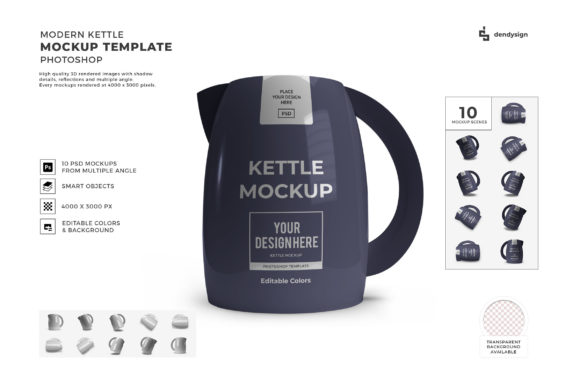
Modern Kettle 3D Mockup Bundle
Presenting a product image that feels real without the hassle of a full photoshoot is one of the most practical advantages a designer or marketer can have. The Modern Kettle 3D Mockup Template Bundle delivers exactly that—a set of customizable, high-resolution mockups that let you showcase kettle designs in a variety of contexts. Whether you are launching a new kitchen appliance line, pitching a concept to a client, or building a visual brand story, this bundle provides a reliable foundation that saves time and elevates the final output.
A Versatile Foundation for Product Storytelling
At its simplest level, the bundle offers multiple angles, lighting presets, and editable materials. But its real value lies in the flexibility it gives you to control the narrative around your product. A kettle is not just a functional object—it appears in kitchens, cafes, lifestyle shoots, and editorial spreads. The mockup templates allow you to drop your design into these settings without constructing scenes from scratch. This means you can focus on what matters: the product itself and the story you want it to tell.
The realism baked into these files makes them suitable for everything from e-commerce listings to high-end catalog presentations. Instead of spending hours tweaking reflections, shadows, and textures, you get a starting point that already looks convincing. From there, you can refine the mood, adjust the materials, and align the aesthetic with your brand guidelines.
Minimalist Kitchenware
If your audience leans toward modern, clean interiors, you can use the mockup to highlight form and material quality. Choose soft, diffused lighting and neutral backgrounds. Swap in matte metallic or sleek plastic finishes. The simplicity of the scene lets the kettle become the hero. This approach works particularly well for brands that emphasize functionality, ergonomics, or sustainable materials. Pair it with subtle props like a wooden cutting board or a simple ceramic mug to anchor the product in a real kitchen environment without cluttering the image.
Industrial and Retro Styles
For a more rugged or nostalgic feel, the mockup templates allow you to experiment with darker backgrounds, warmer tones, and sharper contrasts. Adjust the base material to mimic enamel, copper, or brushed steel. This works well for brands targeting the home-brewing community, vintage kitchen enthusiasts, or anyone looking to evoke a sense of craftsmanship. You can also add steam effects or slight imperfections in the texture to enhance authenticity. The goal is to make the kettle feel like it has a history, even if it is a brand-new design.
Editorial Lifestyle Scenes
Magazine-worthy product shots often rely on context—the kettle sitting on a countertop next to a jar of coffee beans, with sunlight streaming through a window. The templates give you the base scene, and you can layer in additional elements like foliage, textiles, or utensils. Because the lighting and composition are already solid, you can focus on styling and narrative. This is especially useful for bloggers and content creators who need hero images for recipe posts, product reviews, or social media campaigns that feel aspirational without feeling staged.
For E-Commerce and Small Brands
Consistency is key when you are building an online store. Customers need to trust that the product they see is what they will receive. Using the same mockup template across your entire product line ensures a uniform look that reinforces brand recognition. You can adjust the colors and finishes to match each variant, then batch-produce images in a fraction of the time it would take to photograph each one individually. This approach also makes it easy to update visuals when you introduce new colors or limited editions.
For Designers and Freelancers
When pitching a new kettle design to a client, realism is everything. A concept sketch or a flat CAD drawing can be difficult to translate into a vision. Placing your design into a photorealistic 3D mockup instantly communicates scale, materials, and emotional tone. You can present multiple variations side by side, each with different lighting or backgrounds, to help the client visualize options. This builds confidence in your work and reduces the back-and-forth that often happens when clients cannot fully see what you envision.
For Content Creators and Bloggers
Your audience expects visuals that are both beautiful and informative. Whether you are reviewing kitchen gadgets, sharing recipes, or writing about design trends, the mockup gives you a consistent visual anchor. You can use it as a featured image, embed it in a tutorial, or repurpose it for social media posts. Because the template is editable, you can also update it seasonally—changing backgrounds or props to match holidays, summer themes, or any other contextual shift.
For Educators and Hobbyists
Teaching design principles often requires clear, uncluttered examples. The kettle mockup is ideal for demonstrating concepts like composition, lighting, texture mapping, and color theory. Students can practice swapping materials, adjusting reflections, and understanding how different environments affect a product’s perceived value. The bundle becomes a teaching tool that bridges the gap between theory and practical application, letting learners experiment without needing a professional studio setup.
Examples That Bring Concepts to Life
Consider a brand launching a retro-inspired line of electric kettles. Using the mockup, they can select a warm, slightly dimmed lighting preset that mimics a cozy kitchen at dusk. They adjust the kettle’s body to a pastel mint green and swap the handle material to a faux wood grain. The final image sits on a marble countertop with a single teaspoon resting nearby. The result is an image that feels both nostalgic and fresh, ready for packaging or a landing page.
Alternatively, imagine a freelance designer tasked with creating a presentation for a client who produces high-end glass kettles. The designer uses the mockup to emphasize transparency and water levels. They remove the default handle color, apply a glass-like material, and position the camera to catch the refraction of light through the water. The final render shows a sleek, modern silhouette that communicates quality and precision. The client sees exactly how the product will look in a real setting, making it easier to approve the design direction.
For a seasonal social media campaign, a content creator takes the mockup and adds a simple linen napkin, a few cinnamon sticks, and a soft vignette. The background is a warm orange gradient. The kettle itself is rendered in deep copper. The resulting image suggests autumn comfort, perfect for promoting seasonal recipes or kitchen sales. Because the template is reusable, the creator can produce a whole series of images for different holidays without shooting a single photo.
Practical Tips for Consistent and Original Results
To get the most out of the bundle, treat it as a starting point rather than a final destination. Start by establishing a clear visual hierarchy: the kettle should be the focal point, with backgrounds and props serving as support. Avoid crowding the scene with too many elements. If the mockup includes multiple layers, take advantage of them. Adjust the depth of field to soften the background slightly, drawing attention to the product’s details.
Consistency across a series of images is easier to maintain if you set a few rules before you begin. Decide on a base lighting direction, a primary color palette, and a fixed camera angle for core product shots. Variations can then be used for context shots or details. Organize your files with clear naming conventions—this is especially helpful when you are working with multiple clients or product lines. Keeping the original templates intact and saving customized versions separately prevents confusion later.
Originality does not require reinventing the wheel. Small changes can make a mockup feel unique. Swap out the default background for a subtle gradient or a custom texture. Adjust the reflections to match a specific environment. Add a subtle gradient to the kettle body to simulate brushed metal or a glossy ceramic glaze. The bundle gives you a realistic base; your personal touch comes from the choices you make about color, material, and composition.
Keeping the Audience in Focus
Every visual choice should serve the people who will see it. A minimalist presentation with clean lines and soft lighting appeals to a premium, design-conscious audience. A warmer, more informal layout with textured backgrounds and casual props speaks to homemakers and lifestyle readers. The mockup lets you shift between these tones without starting over. The key is to always ask: does this image help the viewer understand the product’s value?
When creating for a younger audience, consider brighter lighting, saturated colors, and composition that feels energetic. For a more mature demographic, opt for muted tones, subtle gradients, and a sense of reliability. The template’s flexibility allows you to test different approaches quickly. You can ask a few people from your target group for quick feedback on which version resonates more. That small step can refine your visual direction significantly.
Having a reliable mockup bundle in your toolkit does not replace creativity—it frees it. By handling the technical heavy lifting of realistic rendering, the Modern Kettle 3D Mockup Template Bundle lets you focus on storytelling, branding, and connecting with your audience. Whether you are a solo entrepreneur launching your first product or a seasoned designer juggling multiple client projects, this kind of resource helps you produce polished, professional results without the overhead of a full production shoot.